A pizza has maybe six ingredients. Flour, water, salt, yeast, tomato, cheese — plus whatever goes on top. With only six levers to pull, the quality of each one matters a lot more than most customers realize. We get asked all the time what we use and where it comes from. Here is the full accounting, start to finish, because there is no reason to keep any of it secret.
Flour. We run a blend of high-protein bread flour from a regional mill that has been supplying Philadelphia pizzerias since the 1970s. The protein content runs 13–14%, which gives us the structure we need for a high-hydration dough without losing the tenderness in the center. We have tested imported "00" Italian flours — the kind a proper Neapolitan pizzeria would use — and for our style and our oven, the domestic bread flour actually delivers a better result. The higher protein handles the heat of our oven without getting too crackery at the edge.
Water. Municipal tap water, filtered. Some pizzerias make a religion out of "Brooklyn water" or "Chicago water" — we have tested this in a blind taste panel and we cannot consistently pick out the difference between filtered municipal water and bottled. Where water does matter is in the fermentation: our water is temperature-controlled so the dough ferments at a predictable rate. That is a kitchen discipline more than an ingredient choice.
Salt. Kosher salt for the dough. A good finishing salt — we currently use a flaky sea salt from a small producer in Maine — for the white pie.
Yeast. A small amount of instant yeast, supplemented by the natural wild yeast that lives in our walk-in and our mixers. A lot of the character in a long-fermented dough comes from the wild fermentation you cannot measure or order from a catalog. It builds up over years.
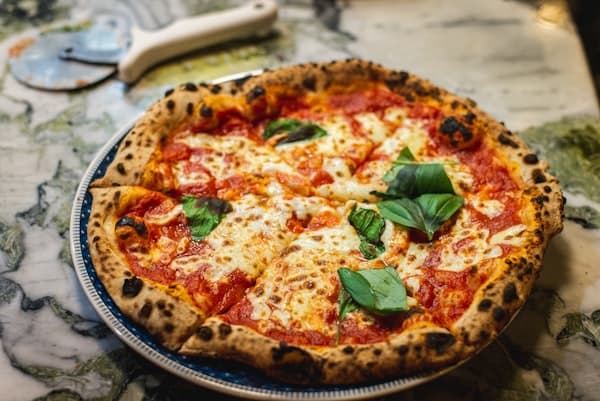
Tomatoes. This is where a pizza stands or falls. We use California plum tomatoes, whole peeled, packed in their own juices, crushed by hand on the day they are used. We do not buy "pizza sauce" — that is a pre-seasoned, pre-cooked product that removes the one great quality a tomato has, which is that it tastes like a tomato. Our crushed tomato gets a pinch of salt, a drizzle of olive oil, maybe some fresh oregano, and goes on the pie raw. The oven cooks it.
Mozzarella. We use two forms. For most pies, a low-moisture whole-milk mozzarella from a dairy in New Jersey — shredded fresh every morning on-site, never frozen. For the white pie and certain specials, fresh buffalo mozzarella, hand-torn. The low-moisture kind melts without releasing a pool of water that saturates the crust. The fresh kind delivers a different textural and flavor experience — creamier, cleaner, more delicate. Both have their place.
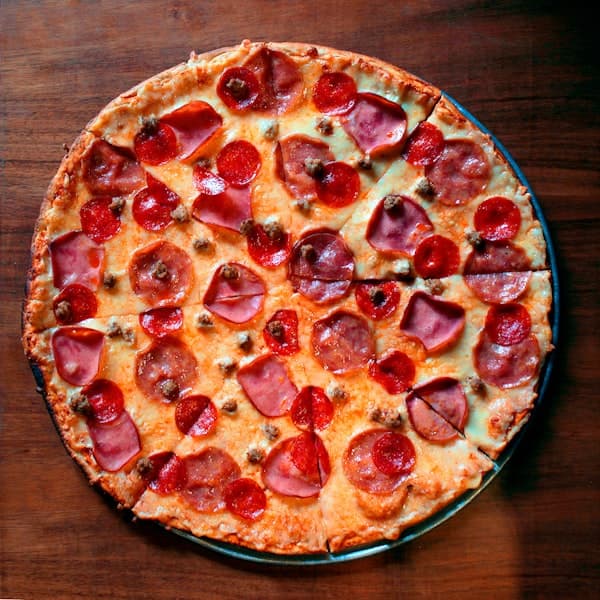
Pepperoni. This is an item we are stubborn about. We use a natural-casing, cup-and-char pepperoni from a small producer in the Midwest. When it hits our oven, the edges curl up into little cups, the fat renders, and the bottom caramelizes into a black char. A flat, sweating pepperoni on a pizza is a sign of a shop that is using the cheap stuff. Cup-and-char pepperoni costs us about 40% more. It is non-negotiable.
Olive oil. Extra virgin, cold-pressed, from a Sicilian cooperative. We go through a gallon every couple of days. On every white pie, around the rim of every cheese pie after it comes out of the oven, drizzled on slices that go to customers who want it — the olive oil is not an afterthought, it is a final seasoning step and it needs to taste like what it is.
Basil, oregano, garlic. Fresh basil is grown hydroponically by a supplier in Lancaster County, delivered twice a week. Oregano is dried Greek oregano — fresh oregano does not do what dried does in a pizza context. Garlic is peeled fresh daily.
Why does any of this matter to a customer who just wants a Friday night pie? It matters because the gap between a pizza made with these ingredients and a pizza made with the cheap alternative is bigger than any one choice. Cheap tomato, cheap cheese, cheap pepperoni, cheap flour — each one on its own is fine. Stacked together, you end up with a pie that tastes like every other chain pie. Real tomato, real cheese, real pepperoni, real flour — you end up with something that tastes like food. We did not invent any of this. We just committed to it and we do not cut corners on it. That is the whole ingredient story.